KV Physician Services, LLC

Patient & Insurance Information
Understanding Your Health Insurance Benefits
Health insurance can be complex, and understanding your coverage is an important part of managing your healthcare. While every insurance plan is different, being familiar with common terms and processes can help you avoid unexpected costs and make informed healthcare decisions.
The information below is intended for educational purposes and may help answer some of the most common questions patients have regarding their health insurance coverage.
Understanding Your Primary Care Provider (PCP)
Many health insurance plans require members to select a Primary Care Provider (PCP). Your PCP serves as your main healthcare provider and may coordinate referrals to specialists when necessary.
How to Change Your PCP
If you wish to change your Primary Care Provider:
-
Contact your insurance company using the customer service number on your insurance card.
-
Request a PCP change through the insurer's member portal or customer service department.
-
Confirm the effective date of the change.
-
Verify that your selected provider is participating in your insurance network.
Always notify your healthcare provider of any insurance or PCP changes before your appointment.
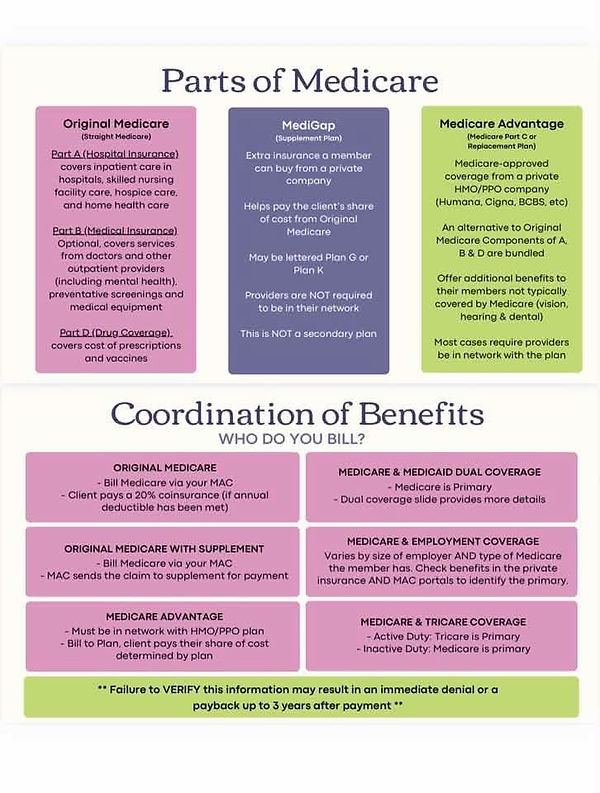
What Is Coordination of Benefits (COB)?
Coordination of Benefits occurs when a patient is covered by more than one insurance plan.
Examples include:
-
Coverage through your employer and a spouse's employer.
-
Medicare and a commercial insurance plan.
-
Coverage under a parent's insurance and your own insurance plan.
Insurance companies use Coordination of Benefits rules to determine which plan pays first and which pays second.
Why Is COB Important?
Failure to update Coordination of Benefits information may result in:
-
Delayed claim processing
-
Denied claims
-
Requests for additional information
-
Unexpected patient balances
Patients should notify their insurance companies whenever they obtain additional coverage or experience changes in coverage.
Understanding Referrals and Authorizations
Some insurance plans require referrals or prior authorizations for certain services, specialists, procedures, or diagnostic testing.
It is the patient's responsibility to understand their plan requirements and verify whether authorizations are needed before receiving services.
Failure to obtain required authorizations may result in reduced benefits or non-covered services.
Understanding In-Network and Out-of-Network Providers
Insurance plans often maintain networks of participating providers.
In-Network Providers
Providers who have contracted with your insurance company and generally offer lower out-of-pocket costs.
Out-of-Network Providers
Providers who do not participate in your insurance network and may result in higher patient responsibility.
Before scheduling services, patients should verify that both their provider and facility participate with their insurance plan.
The No Surprises Act
The No Surprises Act is a federal law that protects patients from certain unexpected medical bills.
The law generally protects patients from surprise billing for:
-
Emergency services
-
Certain emergency transportation services
-
Certain services provided by out-of-network providers at in-network facilities
Patients are also entitled to receive information regarding their rights and protections under this law.
If you believe you have received a surprise medical bill, contact your health plan or visit official government resources for additional information regarding your rights under the No Surprises Act.
Verify Your Insurance Information
Insurance benefits, coverage requirements, copayments, deductibles, and network participation can change throughout the year.
Patients are encouraged to:
-
Review their insurance benefits annually.
-
Update insurance information promptly.
-
Notify providers of coverage changes.
-
Confirm referral and authorization requirements before appointments.
-
Verify network participation before receiving services.
Important Disclaimer
The information provided on this page is intended for general educational purposes only and should not be considered insurance, legal, or financial advice. Insurance benefits and coverage vary by plan and carrier. Patients should contact their insurance company directly for specific benefit information, eligibility, coverage requirements, and questions regarding claims or billing.
Deductible
The amount you have to pay out of pocket for expenses before the insurance company will cover remaining costs.
Explanation of Benfits (EOB)
An Explanation of Benefits is a statement sent by your insurance company that explains how a claim was processed. An EOB is not a bill. It shows:
-
Services received
-
Amount billed
-
Amount paid by your insurance
-
Any patient responsibility
Coinsurance
Percentage that insurance does not cover. For example a 70/30 insurance plan means that the insurance pays 70% of allowed amount and the patient pays 30%. This typically comes into play after you have met your deductible.
Out-of-Network Provider
An out-of-network provider does not have a contract with your insurance company. Receiving care from an out-of-network provider may result in higher costs or reduced coverage depending on your plan.
Copay
Fixed fee for your office visit that is due from patient at time of service. Depended on services received, coinsurance or deductible may still be owed on additional services outside of standard office visit.
Prior Authorization
Some insurance plans require approval before certain procedures, tests, medications, or services are covered. Failure to obtain prior authorization when required may affect coverage or reimbursement.
Out of Pocket Max
This is the maximum amount you will pay for covered healthcare expenses during a plan year. Once this limit is reached, your insurance plan generally pays 100% of covered services for the remainder of the year, subject to plan rules.
Coordination of Benefits (COB)
Coordination of Benefits is the process used when a patient has more than one insurance policy. Insurance companies determine which plan pays first and which plan pays secondary benefits.
Helpful Reminder
Health insurance plans vary significantly by carrier and policy. Patients are encouraged to review their benefits annually and contact their insurance company directly for questions regarding coverage, referrals, authorizations, claim status, or benefit eligibility.